
Why is winter the best time to remove a tree? Consider these key factors.
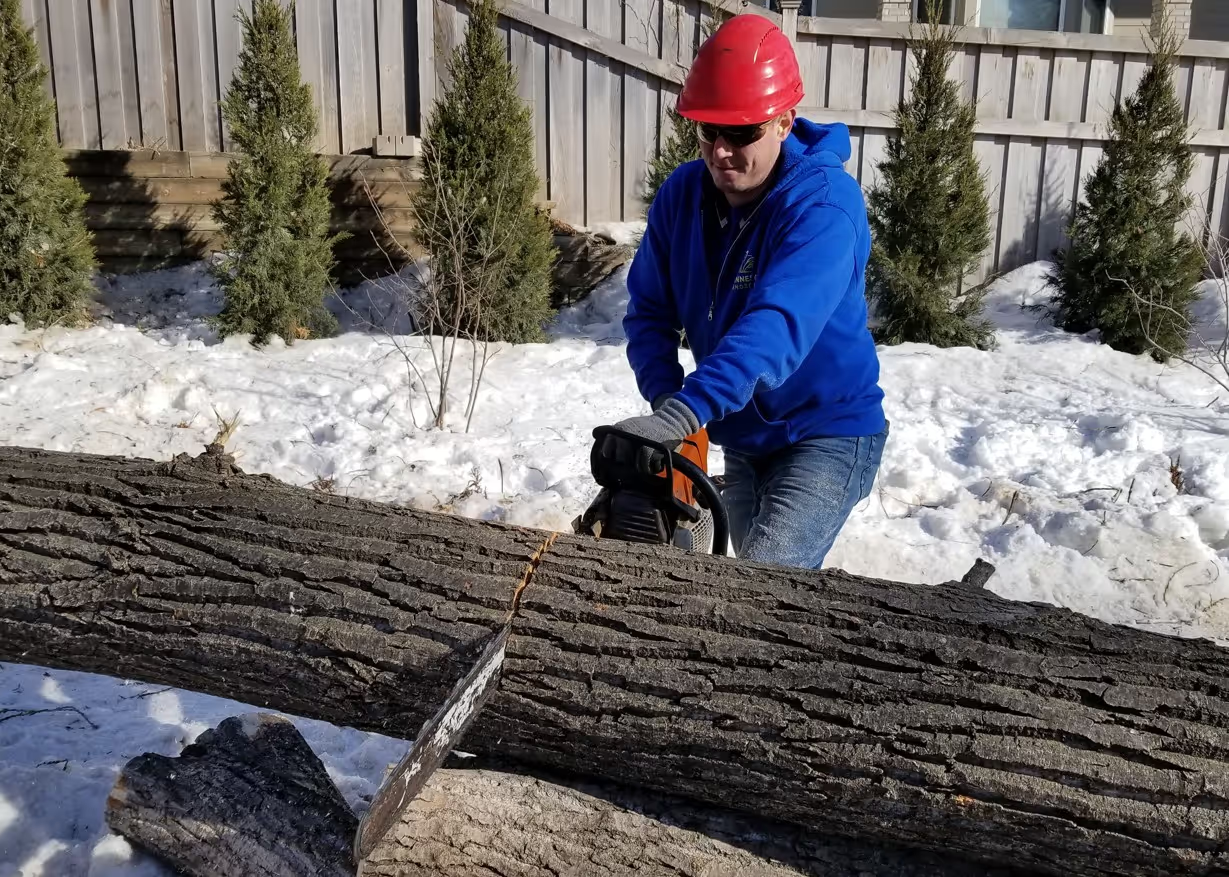
Most Twin Cities homeowners think of tree removal as a spring or summer project—something to tackle when the weather is warm and pleasant. But professional arborists and experienced landscape companies know a secret: late winter, particularly February and March, is actually the ideal time for tree removal in Minnesota.
At Minnesota Landscapes, our ISA Certified Arborists have been safely removing trees throughout White Bear Lake, Shoreview, Woodbury, and the Twin Cities metro since 1996. Over nearly three decades, we've learned that strategic timing makes the difference between a smooth, cost-effective removal and a complicated, expensive ordeal.
If you've been putting off removing that dead ash tree, the storm-damaged maple blocking your view, or the overgrown evergreen that's outgrown its space, February and March offer compelling advantages you won't find any other time of year.
Trees are fully dormant in February and March—no active sap flow, no leaf production, no energy being directed toward growth. This dormancy creates several critical advantages for safe tree removal:
Clear Visual Assessment: Without leaves obscuring the view, our ISA Certified Arborists can clearly see the entire tree structure—weak branches, decay pockets, dangerous leans, and potential hazards that would be hidden during the growing season.
Reduced Stress on Surrounding Plants: Dormant trees can be removed without damaging active root systems of nearby plants. There's no competition for water and nutrients happening underground, so nearby trees and shrubs aren't stressed by the removal process.
Predictable Tree Behavior: Dormant trees respond predictably during removal. There's no sap pressure that can cause unexpected movement, no active growth that creates tension in branches, and no leaves adding wind resistance that complicates cutting.
Here's an advantage many homeowners never consider: Minnesota's frozen ground in February and March often provides better equipment access than summer conditions ever could.
Heavy Equipment Access Without Lawn Damage: Frozen ground can support heavy equipment—cranes, lifts, and removal trucks—without causing the ruts, compaction, and destruction that would devastate your lawn in summer. That massive oak in your backyard? Removing it in February means equipment can access the site without turning your yard into a muddy disaster.
Stable Working Platforms: Our crews can safely position equipment on frozen ground without worrying about sinking, sliding, or creating drainage problems. This stability improves both safety and efficiency.
Reduced Property Impact: When ground is frozen, there's minimal soil disturbance, no mud tracked across your property, and significantly less cleanup required compared to summer removals.
Patrick Erkens, Minnesota Landscapes' lead designer and project manager since 2009, regularly incorporates late-winter tree removal into comprehensive landscape renovation plans: "When we're planning major landscape projects for spring installation, we schedule problematic tree removals in February. The frozen ground means we can remove trees without damaging the areas where we'll be installing new patios, plantings, or lighting systems come spring."
Late winter is traditionally the slowest season for tree services—which creates advantages for savvy homeowners:
Flexible Scheduling: February and March typically offer much more scheduling flexibility than the spring-through-fall rush. Need removal done by a specific date to coordinate with other landscape projects? You're far more likely to get your preferred timing in late winter.
Focused Attention: Our crews aren't juggling multiple emergency calls from summer storm damage or trying to squeeze your removal between dozens of other projects. Your tree removal gets the focused attention it deserves.
Better Value: Many tree service companies, including Minnesota Landscapes, offer better pricing during the slower winter months. The same removal that might cost 15-20% more in June could be completed more economically in February.
Avoid the Spring Rush: By March and April, everyone with winter damage wants immediate service. Book your February removal now, and you'll avoid the weeks-long wait times that frustrated homeowners face during peak season.
Smart homeowners use February tree removal to set the stage for spring landscape transformations:
Increased Sunlight for New Plantings: Removing trees that cast excessive shade in February gives you maximum time to plan and install sun-loving landscape plantings that will thrive in the newly opened space.
Space for Patio Installation: That tree blocking the perfect patio location? Remove it in February, and the site is ready for design and installation as soon as conditions permit in spring.
Improved Views: Trees blocking lake views, sunset perspectives, or architectural features can be removed in late winter, giving you the entire spring and summer to enjoy the improved sightlines.
Easier Stump Grinding: Frozen ground sometimes allows for easier stump removal, and scheduling stump grinding immediately after winter removal means the entire area is ready for spring renovation.
Kelly Bremer, Minnesota Landscapes' designer and plant manager, regularly coordinates late-winter tree removal with spring planting plans: "When clients want to transform a shady yard into a sun-drenched entertaining space, we start by removing the problematic trees in February. By the time we're ready to install the new patio and plantings in May, the site has had months to settle, and we're working with a clean slate."
Timing tree removal for late winter provides specific disease and pest management benefits:
Emerald Ash Borer (EAB) Management: Dead or dying ash trees should be removed before spring when adult EAB beetles emerge. Late winter removal eliminates overwintering EAB larvae and reduces the population threatening healthy ash trees in your neighborhood.
Oak Wilt Prevention: For oak trees, late winter removal occurs during the low-risk period for oak wilt transmission. The beetles that spread this devastating disease aren't active in February and March.
Reduced Fungal Spore Spread: Many tree diseases spread through airborne spores that are most active during the growing season. Winter removal minimizes the risk of spreading disease to healthy trees.
No Insect Activity: All the insects that might spread from a diseased tree to healthy specimens—bark beetles, borers, and other pests—are dormant or inactive in late winter.
Our tree service specialists throughout Eden Prairie, Edina, and Minneapolis regularly handle disease-related removals. Rick Morrison emphasizes the importance of timing: "If you've got an ash tree killed by EAB, removing it in February means those larvae never emerge as adults to infest your neighbor's trees. You're not just protecting your own property—you're being a good community member."
Not every tree removal is urgent, but certain situations make late-winter removal particularly important:
Dead or Dying Trees: These pose safety hazards year-round but are safest to remove when dormant. Dead trees are also lighter without leaves and sap, making removal more efficient.
Storm-Damaged Trees: Winter storms often leave trees with broken limbs, splits, or dangerous leans. Address this damage in late winter before spring winds cause catastrophic failure.
Disease-Killed Trees: EAB-killed ash trees, oak wilt victims, and trees destroyed by other diseases should be removed before spring pest emergence.
Hazardous Leaners: Trees leaning dangerously toward structures, power lines, or high-traffic areas pose ongoing risk. Late winter removal eliminates this hazard before spring storms arrive.
Trees Blocking Construction: Any tree that needs removal to make way for spring landscape projects, additions, or other construction should come down in February or March.
Overgrown Evergreens: That spruce that seemed perfect when planted 30 years ago but now dwarfs your home? Late winter removal opens space for appropriately scaled replacements.
View-Blocking Trees: Removing trees to open sightlines works best in late winter when you can immediately see the improved view.
Overcrowded Specimens: When multiple trees compete for space, late winter removal of weaker specimens gives remaining trees the entire growing season to expand.
Poor-Condition Trees: Trees with extensive decay, repeated storm damage, or general decline should be removed before they become emergency hazards.
Minnesota Landscapes' comprehensive approach to exterior design includes strategic tree removal as part of long-term landscape planning throughout Cottage Grove, Eagan, and Apple Valley.
Tree removal is dangerous work. The combination of heavy equipment, heights, gravity, and often-compromised tree structures creates serious injury and property damage risks. This is not a DIY project, and not all tree service companies offer equal expertise.
Minnesota Landscapes' ISA Certified Arborists have:
Rigorous Training: Passing the ISA certification exam requires comprehensive knowledge of tree biology, risk assessment, removal techniques, and safety protocols.
Continuing Education: ISA certification requires ongoing education to maintain credentials—our arborists stay current on the latest techniques and safety standards.
Ethical Standards: ISA certification includes commitment to professional ethics, including honest recommendations about which trees truly need removal versus which can be saved.
Insurance and Liability Protection: Professional certification is typically required for comprehensive insurance coverage—protecting you from liability if something goes wrong.
Rick Morrison's ISA certification, combined with nearly three decades at Minnesota Landscapes, means he can evaluate your trees with expertise few companies in the Twin Cities can match.
When Minnesota Landscapes handles tree removal in February or March, here's what you can expect:
Comprehensive Site Assessment: We evaluate not just the tree being removed but all surrounding structures, plants, utilities, and potential obstacles. Winter's clear visibility makes this assessment more thorough.
Detailed Removal Plan: We develop a specific plan for how each tree will be dismantled—which sections come down first, where equipment will be positioned, and how we'll protect your property.
Professional Equipment: We use appropriate equipment for each removal—cranes for large trees near structures, bucket trucks for precise dismantling, and specialized rigging for difficult removals.
Complete Cleanup: We remove all debris, grind stumps if requested, and leave your property clean—significantly easier in winter when there's no mud and mess.
Property Protection: Despite heavy equipment and large tree sections being lowered, we protect your property throughout the process—something frozen ground makes substantially easier.
The smartest Twin Cities homeowners coordinate late-winter tree removal with comprehensive spring landscape installations:
When you work with a design-build company like Minnesota Landscapes rather than separate contractors, you benefit from coordinated planning:
Comprehensive Design: Our designers create plans that address tree removal, new plantings, patio installation, and exterior lighting as integrated elements of a cohesive design.
Efficient Scheduling: We schedule February tree removal, March site preparation, and April-May installation as coordinated phases of a single project—no juggling multiple contractors or waiting for one company to finish before the next can start.
Cost Efficiency: Bundling services often reduces overall costs compared to hiring separate companies for tree removal, design, and installation.
Single Point of Accountability: One company handles your entire landscape transformation from problem tree removal through final planting and lighting installation.
Patrick Erkens emphasizes this advantage: "When clients hire us for comprehensive landscape renovation, we're thinking about tree removal during the initial design phase. We're not surprised by that ash tree that needs removal—we've planned for it, scheduled it optimally, and designed the new landscape to take advantage of the space it frees up."
While February and March offer optimal conditions for planned removals, Minnesota Landscapes also provides emergency tree services year-round throughout the Twin Cities:
Storm Damage Response: When winter storms damage trees threatening structures or blocking access, we respond quickly regardless of season.
Hazard Trees: Trees that pose immediate safety risks can't wait for optimal timing—we handle these emergencies promptly with appropriate safety precautions.
24/7 Availability: Our emergency services are available around the clock when Twin Cities homeowners face tree-related hazards.
However, if your tree removal isn't an emergency, choosing optimal timing provides benefits that emergency removals simply can't match.
If you're considering February or March tree removal, here's how to prepare:
Late winter removal is popular among knowledgeable homeowners—don't wait until March to schedule. Contact Minnesota Landscapes in January or early February to secure your preferred timing.
If you're planning spring landscape projects, discuss tree removal during initial design consultations. This coordination ensures optimal sequencing and often reduces overall costs.
Decide whether you want stump grinding included in your removal or scheduled separately. Grinding stumps immediately after removal often makes sense, especially if you're planning spring plantings or patio installation in that area.
Work with our designers to plan what will replace removed trees. Kelly Bremer can help you select appropriate species that will thrive in the newly opened space and complement your overall landscape design.
February and March tree removal in Minnesota isn't just possible—it's often preferable to warm-season removal. The combination of dormancy, frozen ground access, clear visibility, better scheduling, and optimal preparation for spring projects creates compelling advantages for strategic homeowners.
Minnesota Landscapes has been safely and efficiently removing trees throughout White Bear Lake, Shoreview, Woodbury, Apple Valley, Eden Prairie, Edina, Minneapolis, St. Paul, Mendota Heights, Eagan, Cottage Grove, Afton, Rosemount, and Dellwood since 1996. Our ISA Certified Arborists, professional equipment, comprehensive insurance, and design-first approach mean your tree removal isn't just safe—it's strategically timed to provide maximum benefit for your property.
Don't wait for the spring rush. Contact Minnesota Landscapes today to schedule a professional tree assessment and late-winter removal consultation.
Call 651-457-0000 or visit www.minnesotalandscapes.com
Our ISA Certified Arborists will evaluate your trees, provide honest recommendations about what needs removal, and develop a comprehensive plan that coordinates tree removal with your spring landscape goals.
Serving the Twin Cities metro with professional tree removal, design-build landscaping, patio installation, and exterior lighting services since 1996.

